Health Insurance Design and the Passthrough of List Prices to Out-of-Pocket Costs
“Health Insurance Design and the Passthrough of List Prices to Out-of-Pocket Costs”(with Josh Feng)
When plans must provide a minimum level of coverage, sponsors have an incentive to use list prices and rebates to circumvent coverage restrictions and increase patient cost-sharing. Using exposure to the Medicaid market as an instrument, we confirm that higher list prices lead to higher patient out-of-pocket costs. Passthrough is lowest in PPO and HMO commercial plans and highest in HDHPs and Medicare Part D plans.
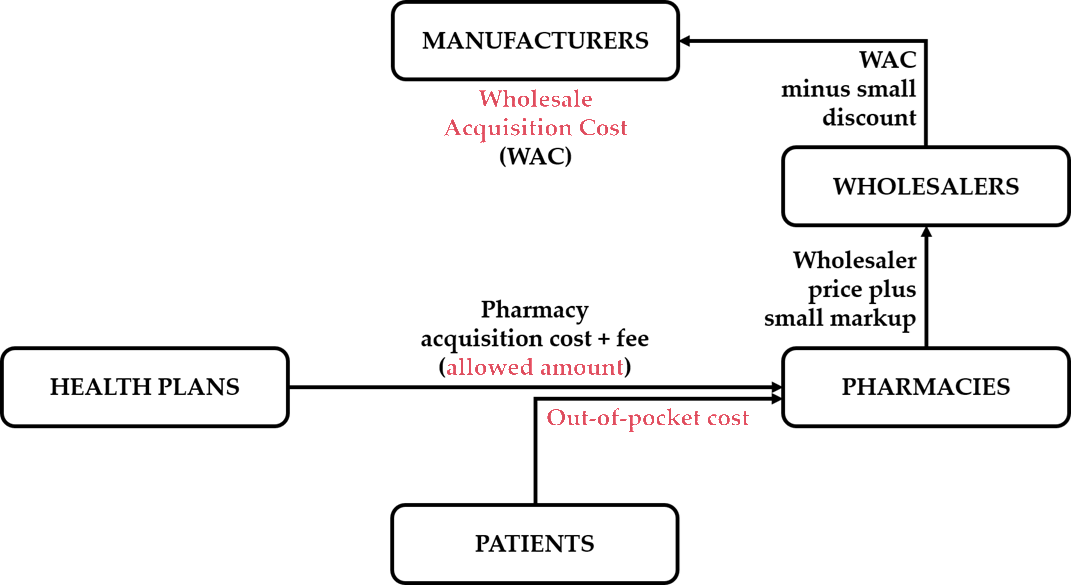
The cost of prescription drugs to U.S. health insurance plan sponsors depends on a nominal, publicly known “list” price, and a hidden rebate that’s individually negotiated with each payer. Over the last two decades, list prices have risen steadily, causing growing concern among policymakers. Yet, when faced with questions about these price increases, pharmaceutical industry stakeholders usually point out that prices net of rebates grow at much slower rates. This response, however, does not explain whether list prices matter, and why their growth has outpaced the growth of net-of-rebate prices in recent years.
Many argue that list prices matter for patients because virtually all health plans choose to peg coinsurance (the percentage patients pay at the pharmacy) to list rather than net prices. But it is not clear, from an economic perspective, why that makes sense, since list prices do not reflect actual acquisition costs. Moreover, evidence that higher list prices pass through to patient out-of-pocket (OOP) costs is actually very weak (Yang et al., 2020; Rome et al., 2021; Lalani et al., 2024).
In this paper, we argue that health plans have an incentive to peg coinsurance rates to list prices to bypass minimum coverage requirements. We then show that passthrough of list price increases to OOP costs happens primarily among these types of health plans.
A Theoretical Model of Health Plan Design with List Prices and Rebates
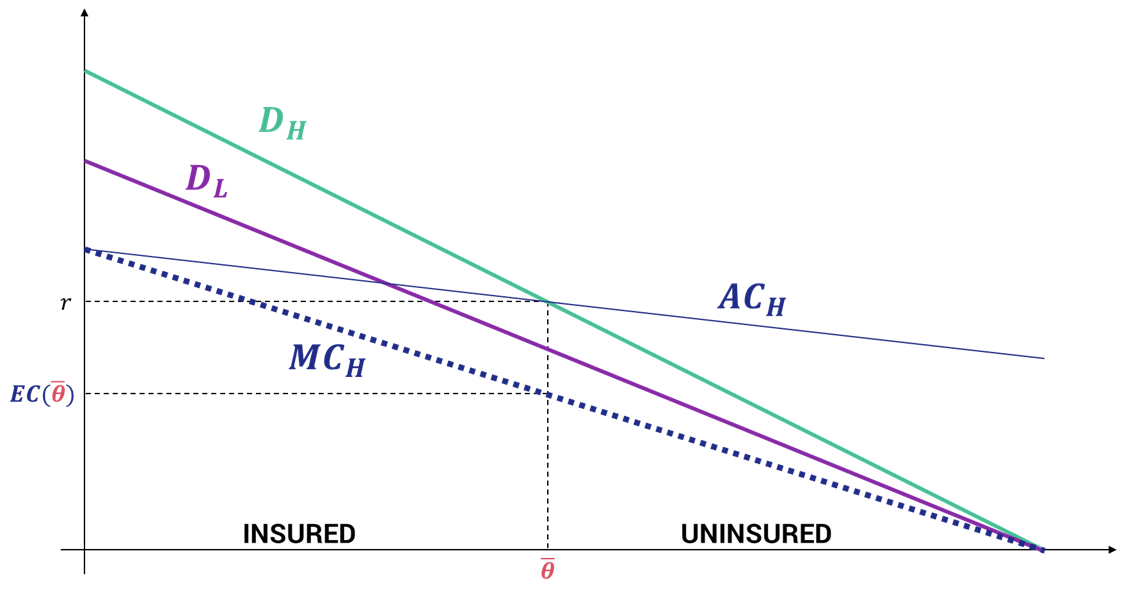
We develop a formal model of health plan design with adverse selection. Plans must satisfy a minimum coverage requirement defined as a maximum coinsurance rate applied to the drug’s list price. In this environment, increasing the list price while negotiating an equal-and-opposite rebate, allows a plan to raise the dollar value of a patient’s coinsurance payment while nominally remaining within the parameters of the coverage requirements. We show that offering these less generous plans at lower premiums is a profitable deviation from the initial equilibrium under very general conditions.
The key implication of the model is that only plans that are constrained in their benefit design will rely on list prices to increase patient OOP costs. In practice, plans in several US insurance market segments are subject to minimum coverage requirements. Medicare Part D plans must provide a minimum standard benefit design consisting of a pre-established set of coinsurance rates. Additionally, since the passage of the Affordable Care Act in 2011, most commercial plans must spend a specific share of premium dollars on medical care. Another potentially relevant restriction arises from the nature of coinsurance rates, which are (in practice) capped at 100%. The rise in popularity of high-deductible health plans (HDHPs) suggests that at least some of these plans may want to increase cost-sharing for first-dollar healthcare spending above this cap.
Empirical Evidence of List Price Passthrough to Patient OOP Costs
To study this question we use retail prescription drug claims from commercial and Medicare Part D plans between 2007 and 2018 matched to data on drug list prices. Our main empirical specification compares within-drug changes in list prices to changes in patient OOP costs.
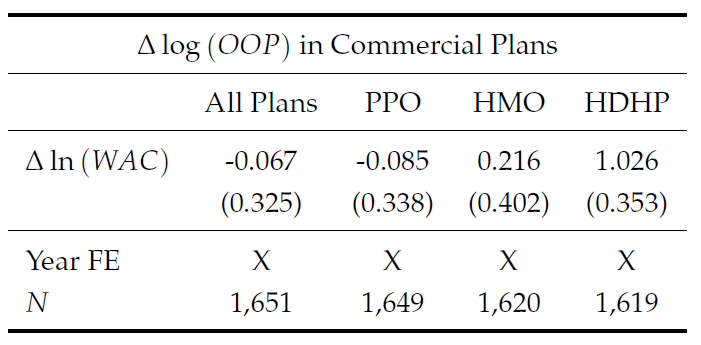
Table 1. Effect of list price growth on OOP cost growth in commercial plans
Because list prices and OOP costs are equilibrium outcomes that are likely affected by similar market forces, we use exposure to the Medicaid program as an instrument for list price growth, mitigating endogeneity concerns (we show in a previous paper that drugs with a high shares of sales to Medicaid patients increase list prices more slowly to avoid an inflation penalty that is part of the formula Medicaid uses to reimburse drug prices).

Table 2. Effect of list price growth on OOP cost growth in Medicare Part D plans
Our results show that list price increases translate into proportionally higher patient OOP costs in plans that face coverage constraints, but have no effect on the OOP costs of patients in “unconstrained” plans. “Constrained” plans include HDHPs (where sponsors may wish to increase coinsurance rates above 100%).
Implications
Our findings are significant for three reasons.
We show that higher list prices translate into higher OOP costs, confirming that the list-net price divergence is not a harmless accounting artifact but a source of real financial burden for patients. These findings support allegations in the Federal Trade Commission’s recent complaint against PBMs.
Our model implies that manufacturers benefit from higher list prices when negotiating with health plans. To see why, consider two identical competing drugs with the same net price, but different list prices. Sponsors offering plans that must offer a minimum level of coverage prefer covering the drug with the higher list price because it will have higher OOP costs, (which in turn allows the plan to lower premiums).
Our model also provides a reason why the list-net spread might benefit plan sponsors—rather than PBMs. If plan sponsors were the primary driver of the list-net price spread, it would explain why this spread has persisted even as PBMs have increasingly integrated with insurers and moved towards full sharing of rebates with payers.
Stocking Under the Influence: Spillovers from Commercial Drug Coverage to Medicare Utilization
“Stocking Under the Influence: Spillovers from Commercial Drug Coverage to Medicare Utilization”(with Emma B. Dean and Josh Feng) Revisions requested at American Economic Review
We argue that drug coverage in commercial insurance can affect utilization in Medicare Part B. Leveraging state-level variation in the adoption of national formularies as an IV, we show that higher exclusion rates in commercial formularies are causally linked to lower Part B utilization. Prescribing patterns of physicians operating across multiple facilities show that the effect is not driven by physician preferences but by facility stocking behavior.
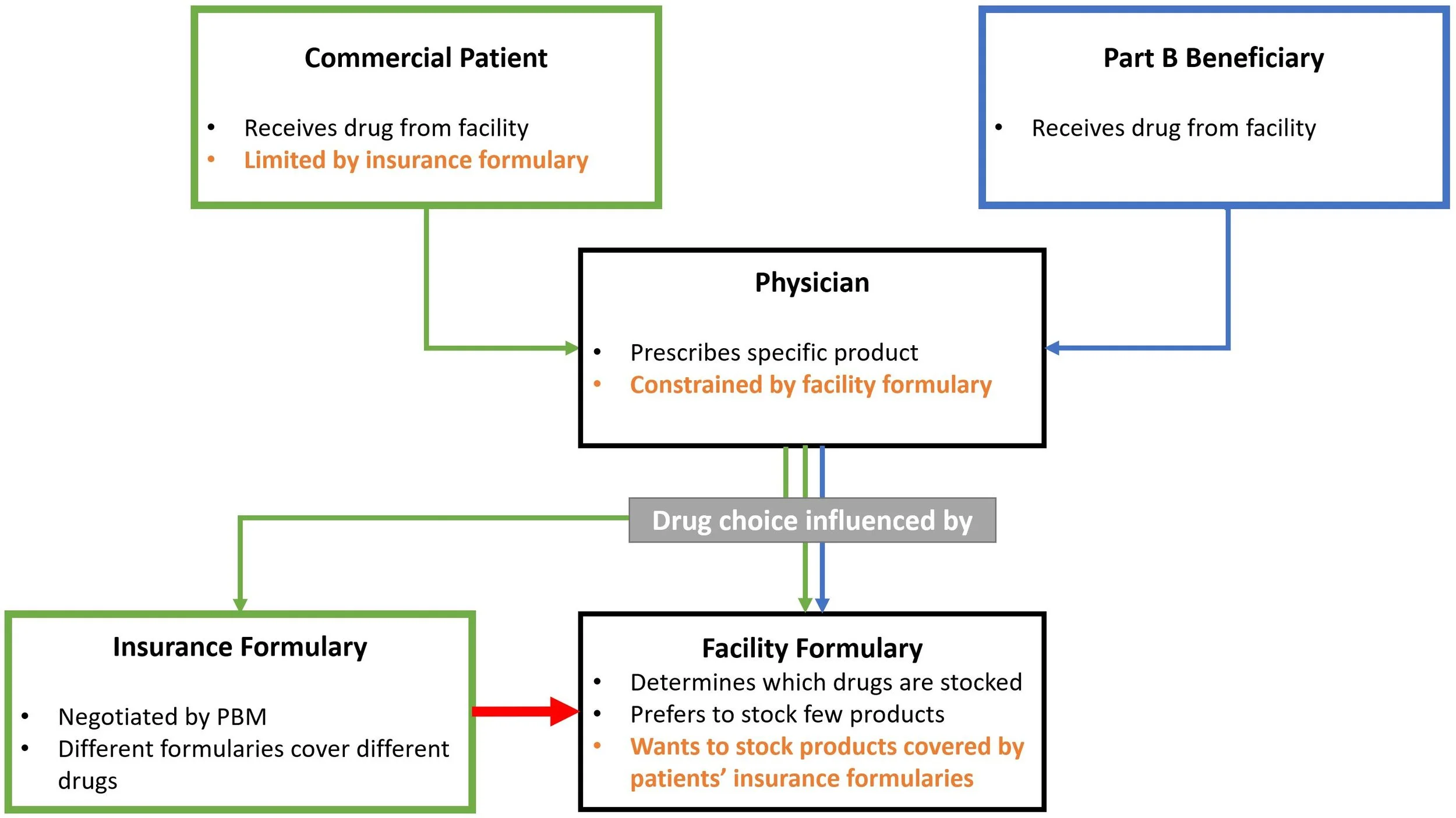
When administering drugs in an outpatient setting (e.g., hospital outpatient departments and physician offices), physicians need to account for restrictions from two types of formularies: the prescription drug formulary of the patient's health plan and the formulary of the facility where the doctor is prescribing.
Prescription drug formularies are tiered menus listing all drugs covered by the health plan. Tiers determine the out-of-pocket cost to the patient. Manufacturers obtain better tier placement by granting higher rebates to payers. To encourage more aggressive competition on rebates, drug formularies often exclude drugs with close substitutes.
Facility formularies determine what drugs are stocked in the facility. Facilities restrict formularies to unlock additional discounts from manufacturers through volume or percentage-based guarantees.

Figure 1. Diagram for impact of facility formularies
When deciding which products to include on the formulary, the facility is incentivized to favor drugs broadly covered by commercial drug formularies to avoid situations where a patient receives a drug not covered by her health plan. This incentive creates a spillover effect from commercial drug formularies to facility formularies. In turn, because facility formularies determine what is administered to all patients receiving care in that facility, this spillover effect introduces a channel through which equilibrium outcomes in the commercial market can influence the utilization of patients in government-sponsored plans, such as Medicare.
Testing for the Spillover Effect
To confirm the existence of this spillover effect, we study variation in commercial formulary coverage and utilization in Medicare Part B. Since unobserved preferences could drive both commercial formulary coverage and Part B utilization, we use an instrumental variable strategy that leverages coverage changes in national formularies—stock products that Pharmacy Benefit Managers sell across the entire US.

Table 1: Impact of Commercial Coverage on Part B Utilization
Results
We find that a 10pp higher exclusion rate in commercial formularies leads to 1.7pp lower utilization in Medicare Part B. This effect is robust to including controls for detailing payments to physicians, and re-weighting observations by state population or market size. In substitution classes defined by a biologic product and its biosimilar competitors, the effect increases to 3pp.
The result is driven by facility-level factors: we find that physicians who work in two facilities often change their prescription patterns to mimic the behavior of other physicians at each facility.

Figure 2. Variation in prescribing that is explained by facility-level factors
The effect of facilities is more pronounced in substitution classes with more homogeneous products, such as antinausea medications and paramagnetic contrast media (i.e., MRI dyes), but exists in virtually all substitution classes we consider.
Takeaways
Our results show that market equilibria in commercial insurance can affect the care received by patients in government-sponsored health plans. These effects arise because commercial and government-insured patients receive care at the same facilities. As facilities tend to provide standardized care, any care decision made in response to commercial market incentives may also affect other patients. These findings raise two important policy issues:
The effect we identify implies that commercial market failures can affect government spending. In particular, we show that poor coverage of cheaper biosimilar drugs in commercial formularies leads to higher Medicare spending.
Our research suggests that changes in physician prescribing behavior could sometimes be more appropriately attributed to facility-level decisions. Recognizing this distinction is crucial because policies aimed at altering physician behavior (e.g., letter campaigns) may prove ineffective when ignoring the restrictions imposed by facilities.